Drive from the sandy Truckee Meadows up toward the decomposed granite of the Mount Rose foothills and the ground changes fast. That transition from loose alluvium to weathered bedrock defines retaining wall design in Reno. A wall that holds perfectly in the valley floor may need a completely different section and drainage detail just a mile uphill. We see this every day. The team evaluates cut height, surcharge, soil friction, and groundwater before a single structural element is sized. For projects where the retained soil is deep or variable, we often pair design with a CPT test to map the exact stratigraphy, or with slope stability analysis when the wall is part of a larger graded cut.
A retaining wall in Reno is only as good as the drainage behind it. We design for zero hydrostatic pressure, always.
Service characteristics in Reno
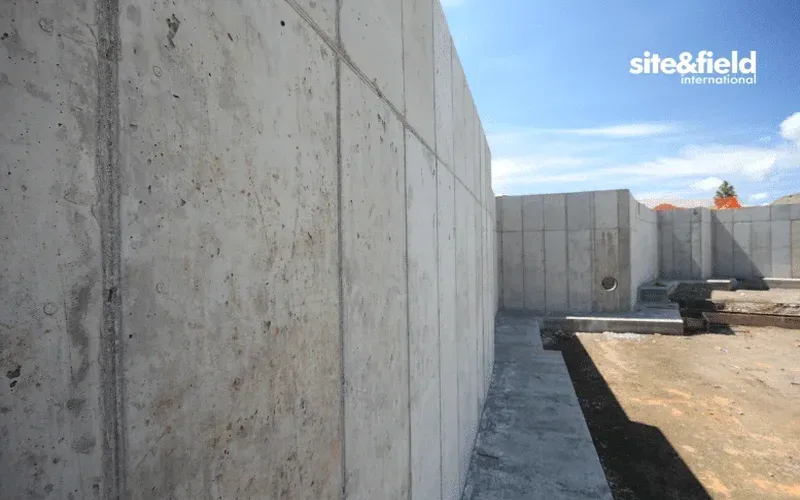
Typical technical challenges in Reno
ASCE 7-22 mandates seismic earth pressure increments that are especially critical in Reno's Site Class D conditions. Loose alluvial deposits in the Truckee Meadows can amplify ground motion, increasing lateral loads on walls by 30 to 50 percent compared to static conditions. We design for this explicitly. A wall that meets sliding and overturning checks under static load can still fail if the seismic increment is ignored. Beyond structural stability, poor drainage is the most common failure mechanism we see in the region. Winter snowmelt saturates the backfill, and without a functioning drain, the wall faces pressures it was never designed to carry. Our designs include redundancy in the drainage path.
Our services
Our retaining wall design services in Reno cover the full cycle from subsurface investigation to construction oversight. We work with developers, architects, and general contractors.
Cantilever and Gravity Wall Design
Full structural and geotechnical design for cast-in-place concrete and masonry walls up to 20 feet, including stability analysis, reinforcement detailing, and drainage specifications tailored to Reno's decomposed granite and alluvial soils.
MSE and Soldier Pile Wall Engineering
Mechanically stabilized earth walls and soldier pile systems for commercial and infrastructure projects. We design for the high seismic demands of western Nevada and coordinate with site grading and utility conflicts.
Common questions
What does retaining wall design typically cost in Reno?
Fees for retaining wall design in the Reno area range from $960 to $3,960 depending on wall height, complexity, and whether subsurface exploration is included. A simple gravity wall under 6 feet is at the lower end, while a 15-foot MSE wall with seismic analysis and drainage design is at the upper end.
Do I need a building permit for a retaining wall in Reno?
Yes, the City of Reno requires a permit for walls over 4 feet in height measured from the bottom of the footing to the top of the wall. Walls supporting a surcharge, such as a driveway or building, require engineering regardless of height.
How do you account for seismic loads in Reno?
We calculate the seismic earth pressure increment using the Mononobe-Okabe method per ASCE 7-22, based on the peak ground acceleration and site class for the specific parcel. Reno's alluvial basins typically fall under Site Class D, which amplifies design loads.
What soil information do you need before starting a wall design?
We need a geotechnical report with soil classification per ASTM D2487, shear strength parameters, groundwater depth, and SPT blow counts. If this data is not available, we can perform the subsurface investigation as part of our scope.
How long does the design process take?
A typical retaining wall design for a residential or light commercial project takes 7 to 10 business days from receipt of the geotechnical report. Complex walls with multiple tiers or shoring requirements may take 2 to 3 weeks.