In Reno, the Truckee Meadows basin hides a complex subsurface where alluvial deposits from the Carson Range meet fine-grained lakebed sediments, and that combination demands a foundation strategy that goes beyond standard footings. We regularly see projects where the upper five to ten feet show competent granular material, yet deeper boring logs reveal compressible clay lenses that can trigger differential settlement under concentrated column loads. Raft/mat foundation design becomes the logical path when the structural load needs to be distributed across a wider footprint, reducing contact pressure on variable strata. Our approach ties direct subsurface data from CPT testing to modulus of subgrade reaction profiles, so the mat thickness and reinforcement are calibrated to the actual stratigraphy beneath the site, not a textbook assumption. For structures with basement levels or heavy mechanical equipment, we also integrate deep excavation monitoring data to confirm that the mat pour sequence does not compromise adjacent utilities or neighboring foundations.
In Reno's basin, raft foundation performance hinges on whether the subgrade reaction modulus reflects actual stratified conditions, not a single average value.
Service characteristics in Reno
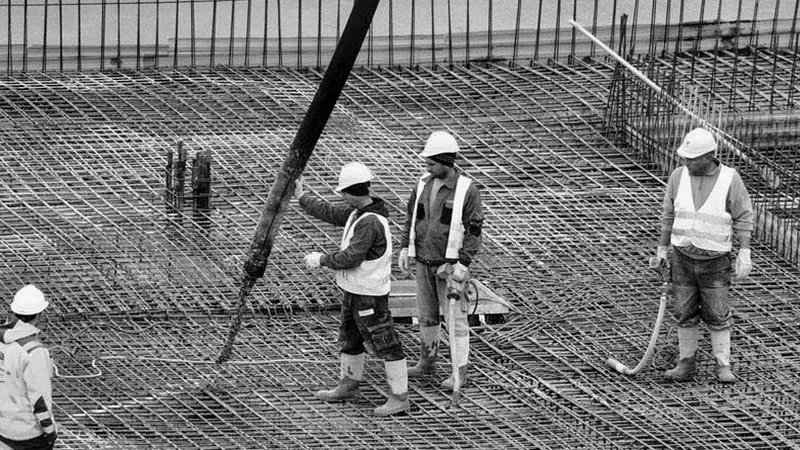
Typical technical challenges in Reno
Reno's development history expanded from the original downtown grid along the Truckee River outward across the alluvial plain, and that expansion buried older irrigation ditches, undocumented fills, and pockets of organic silt that now lie beneath commercial zones. A raft/mat foundation design that skips a rigorous subsurface investigation risks bridging over these soft spots without knowing they exist, which can produce long-term consolidation settlement that manifests as slab cracking and door-frame racking over the first three to five years of occupancy. The seismic hazard compounds the risk: the Mount Rose fault system and the broader Walker Lane seismicity generate ground motions that can amplify through soft near-surface layers, increasing inertial forces on the mat and demanding careful detailing of reinforcement at plan irregularities. We have also observed sulfate concentrations in certain Reno basin soils that exceed 0.10 percent water-soluble sulfate by mass, triggering the need for Type II or Type V cement in the mat concrete per ACI 318 exposure class requirements, a detail that is easy to miss if the geotechnical report does not explicitly flag it.
Our services
Our Reno raft/mat foundation design services are structured to carry a project from initial feasibility through construction-phase support, with each step anchored in site-specific geotechnical data.
Geotechnical Investigation for Mat Design
We plan and execute drilling, sampling, and in-situ testing programs—SPT borings, CPT soundings, and test pits—to define the stratigraphy, groundwater conditions, and engineering properties of the bearing strata beneath the proposed mat footprint.
Soil-Structure Interaction and Settlement Analysis
Using finite element models calibrated to field-derived subgrade reaction values, we predict total and differential settlement under dead, live, and seismic load combinations, identifying zones where mat thickening or reinforcement concentration is required.
Seismic Foundation Design and Detailing
For Reno's Seismic Design Category D conditions, we evaluate kinematic interaction, base shear transfer through the mat, and develop reinforcement detailing at shear walls, collector elements, and mat-to-column connections per ACI 318 Chapter 18.
Construction-Phase Observation and Testing
We provide subgrade inspection prior to the mud slab, compaction verification, and concrete testing during mat placement, ensuring that the as-built conditions match the design assumptions and that the foundation performs as intended.
Common questions
What does a raft/mat foundation design cost for a Reno project?
For a typical mid-rise commercial or multi-family project in the Reno area, the geotechnical investigation, analysis, and mat foundation design package generally ranges from US$970 to US$4,180, depending on building footprint, number of borings, complexity of the soil profile, and whether seismic soil-structure interaction modeling is required.
How do you determine the subgrade reaction modulus for a mat foundation in Reno's basin soils?
We combine field plate load tests performed at the bearing elevation with empirical correlations from SPT N-values and CPT tip resistance. The modulus is not taken as a single number—it varies spatially beneath the mat based on stratigraphic changes, and we input those variations into a finite element model to capture differential stiffness effects.
What seismic provisions apply to mat foundations in Reno?
Reno falls under Seismic Design Category D per ASCE 7-22, which requires consideration of kinematic soil-structure interaction, base shear transfer through the mat diaphragm, and detailing of reinforcement at collector elements and shear wall boundaries. Mat foundations must also comply with IBC Chapter 18 foundation requirements and ACI 318-19 seismic provisions.
How long does the raft foundation design process take from investigation to final drawings?
A typical timeline spans three to five weeks: one week for field drilling and in-situ testing, two to three weeks for laboratory testing and geotechnical report preparation, and one week for the soil-structure interaction analysis and development of mat design recommendations. Larger or more complex sites may extend the schedule.